MindMorph Holistic Psychiatry: off WordPress and onto its own engine before the doors open
A holistic psychiatry practice in Lakewood, Colorado, with telehealth across Colorado and Oregon, moving off WordPress and onto its own engine before its new office opens on December 1. Twenty-six pages, 107 FAQs and 28 videos carried over by script, an Ask finder that turns "ketamine" into the right service and condition, a chat that answers only from the practice's own pages, and 911 and 988 on every clinical page. Booking stays in IntakeQ. In progress, aimed at a launch before the office opens on December 1.
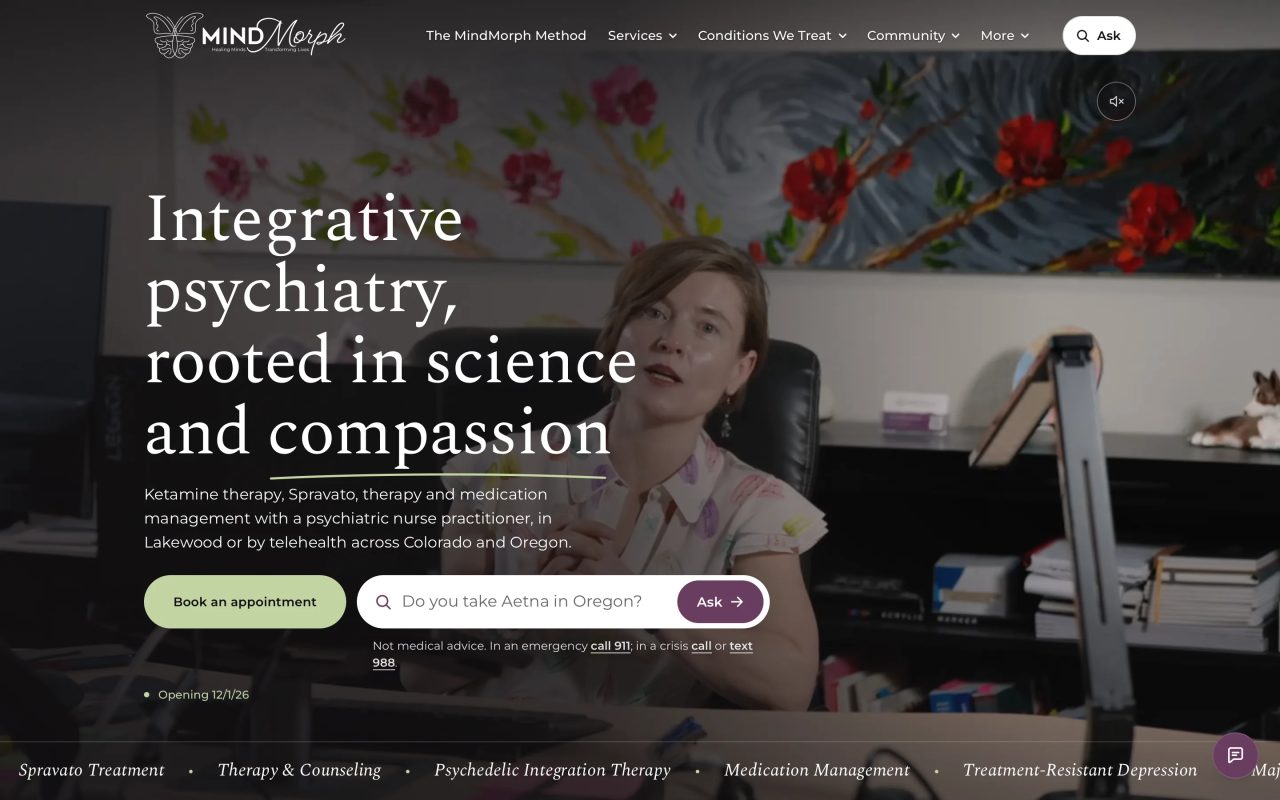
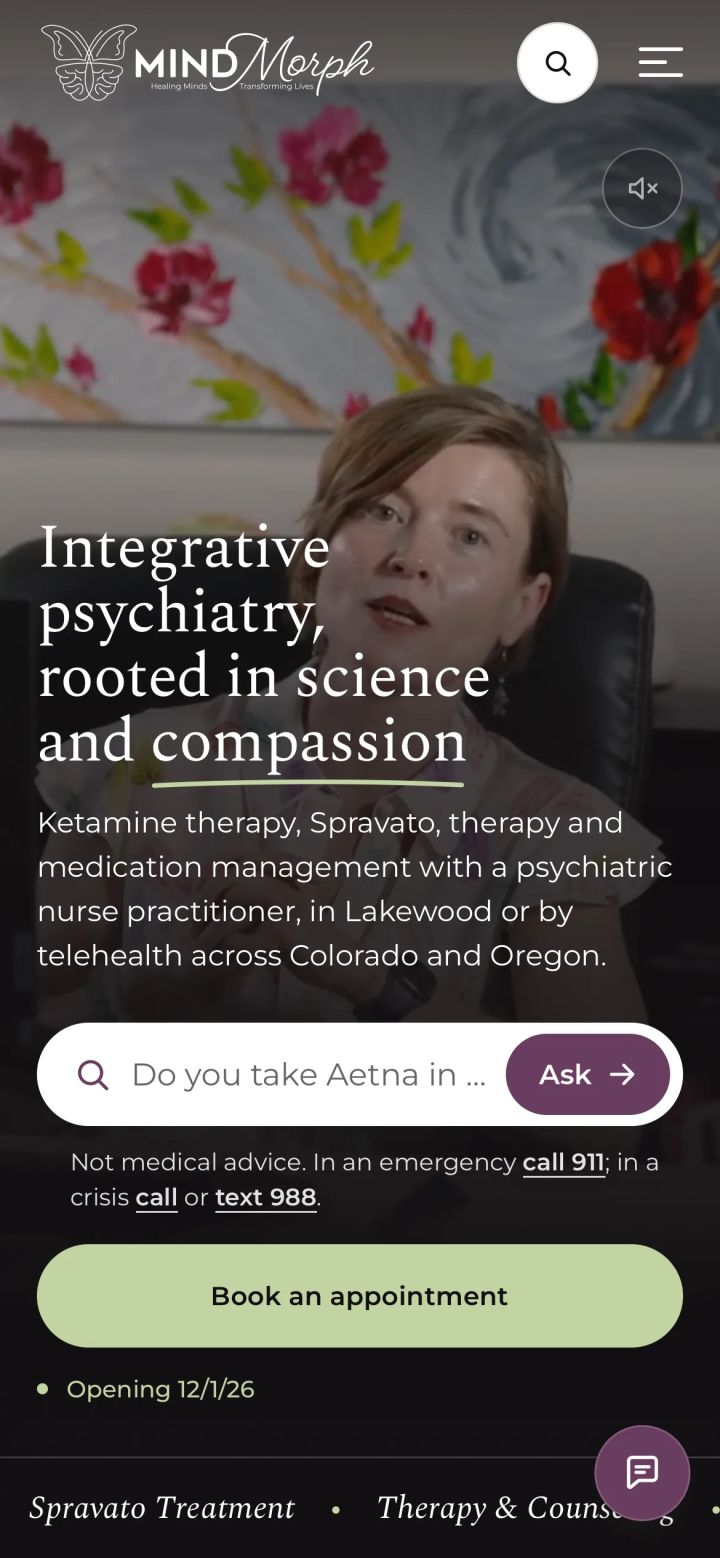
MindMorph Holistic Psychiatry is the practice of Maria "Masha" Steiner-Renoir, a board-certified psychiatric nurse practitioner in Lakewood, Colorado, who sees patients by telehealth across Colorado and Oregon, in English and in Russian. The service pages are medication management, ketamine therapy, Spravato treatment, therapy and counseling, and psychedelic integration therapy. The condition pages run from anxiety and treatment-resistant depression to PMDD, which gets a page of its own for the first time in this build. There is an Integration Circle group and an insurance page sorted by state. The current site runs on WordPress and Elementor. Booking runs through IntakeQ and stays there: the new site links out at the right moment and never holds a patient record.
The rebuild was signed on October 9 and the build started on October 11. The new Lakewood office opens on December 1 after a remodel, and the site is meant to open before the doors do. This page describes the build as it stands on the local demo, which is why there is no live link on it yet.
What moved over from WordPress, and how?
Everything, by script. Rather than paste 26 pages into a new editor, I wrote import migrations that read the WordPress export and write the practice's own tables: 26 pages, 83 FAQs that grew to 107 once I filled the gaps the old site left open, seven blog posts that became insights, 28 videos, 25 settings and the redirects. Of 64 media files, 49 were ingested and 15 were icon SVGs that nothing referenced, so they stayed behind. A migration that can run twice and do nothing the second time is the whole trick: the content can be pulled again right up to launch day, and every current URL either keeps its address or sends a 301 to the new one.
How does the Ask finder work?
An Ask pill in the header, and a bar in the hero that cycles through questions, both open the same panel: "What can we help you find?" Type "ketamine" and it returns the Ketamine Therapy service, a Treatment-Resistant Depression condition card with its linked service, and page chips for anything else that matched. Every service and condition page carries its own "Ask about ..." chip, pre-filled with the subject of the page. Above the results sit three chips that never move: Call 911, Call 988, Text 988. The live WordPress site has no crisis line anywhere. The new one has it on every service page, every condition page, and in the footer.
What does the Guide answer from?
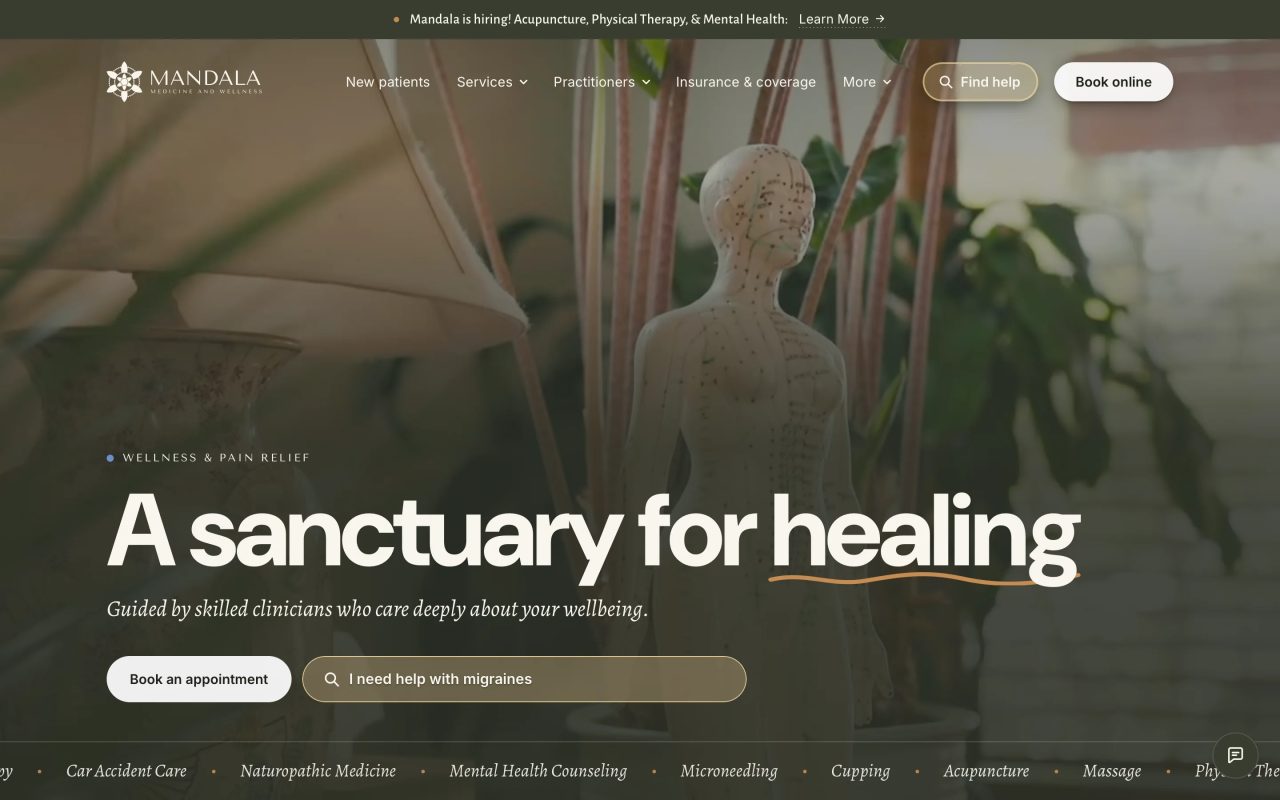
The practice's own pages, through the chat engine I built for Mandala Medicine. The panel opens with a plain statement that it is an AI assistant and cannot give medical advice, three suggested questions, an Ask field, Urgent chips for 911 and 988, and two buttons: Book online, which hands you to IntakeQ, and Search the site. Chats are kept 30 days, then deleted, and the panel says so in its own footer.
Masha runs a second practice on the same engine, so the two sites share one knowledge table with a brand column: one Guide, two voices, each answering in its own brand line. A question that plainly belongs to the other practice gets a referral card, routed by keyword. Crisis and dosing questions never do. Those get the crisis chips and nothing else.
What is different about a psychiatry site?
The claims. No outcome promises anywhere. Five testimonials, verbatim and unattributed, with no outcome language in them. No license numbers on the page: "Licensed in Colorado and Oregon" is the whole credential line, because a number in a footer is a thing to be copied. The crisis chips sit on every clinical page because a psychiatry site is where someone in a bad hour may land. The providers page holds one clinician, and the engine's practitioner and office modules are switched off rather than left standing empty.
What does the practice edit itself?
Everything the public sees. The engine is the one I built for Mandala, forked and trimmed to a single practitioner, so the dashboard Masha gets is the one a sixteen-practitioner clinic runs on:
- Services, conditions, FAQs, insights, videos and locations as content types, each with a Draft, Schedule, Publish bar.
- Text, photos and lists edit in place on the live page.
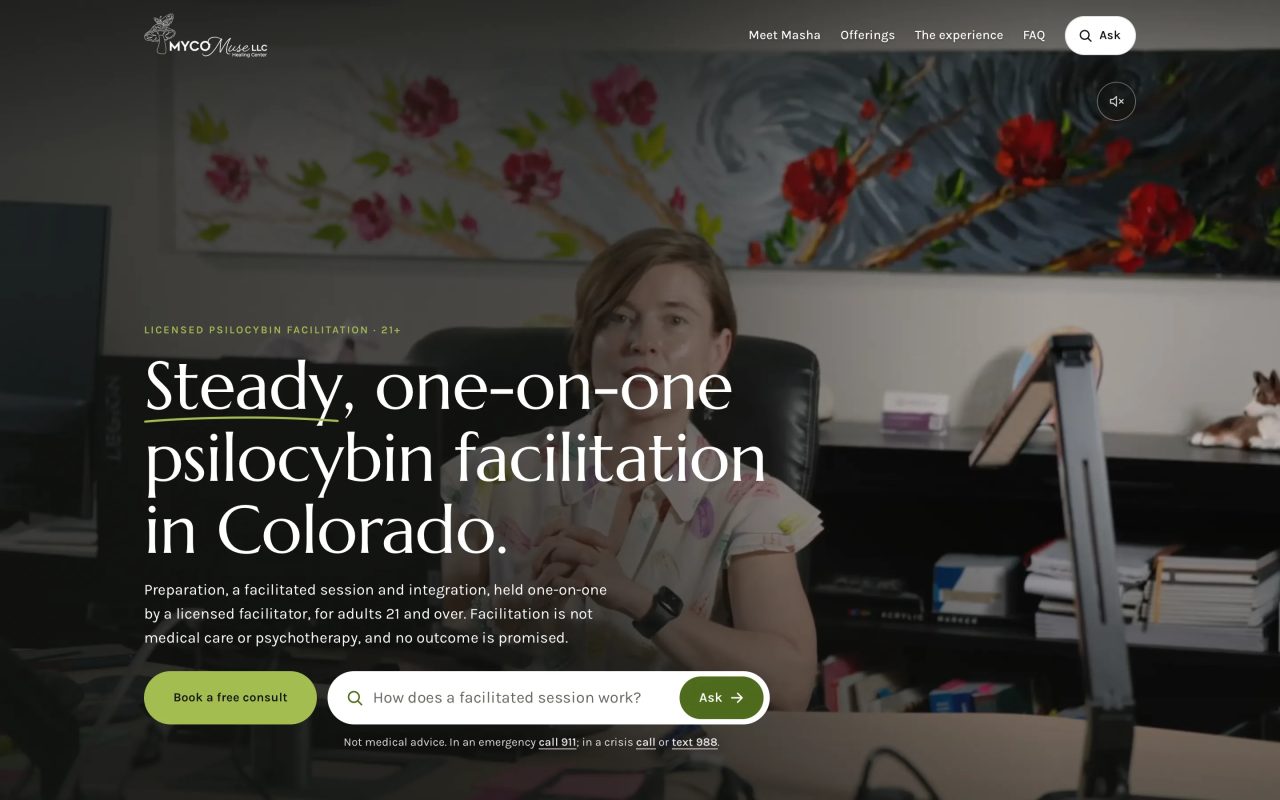
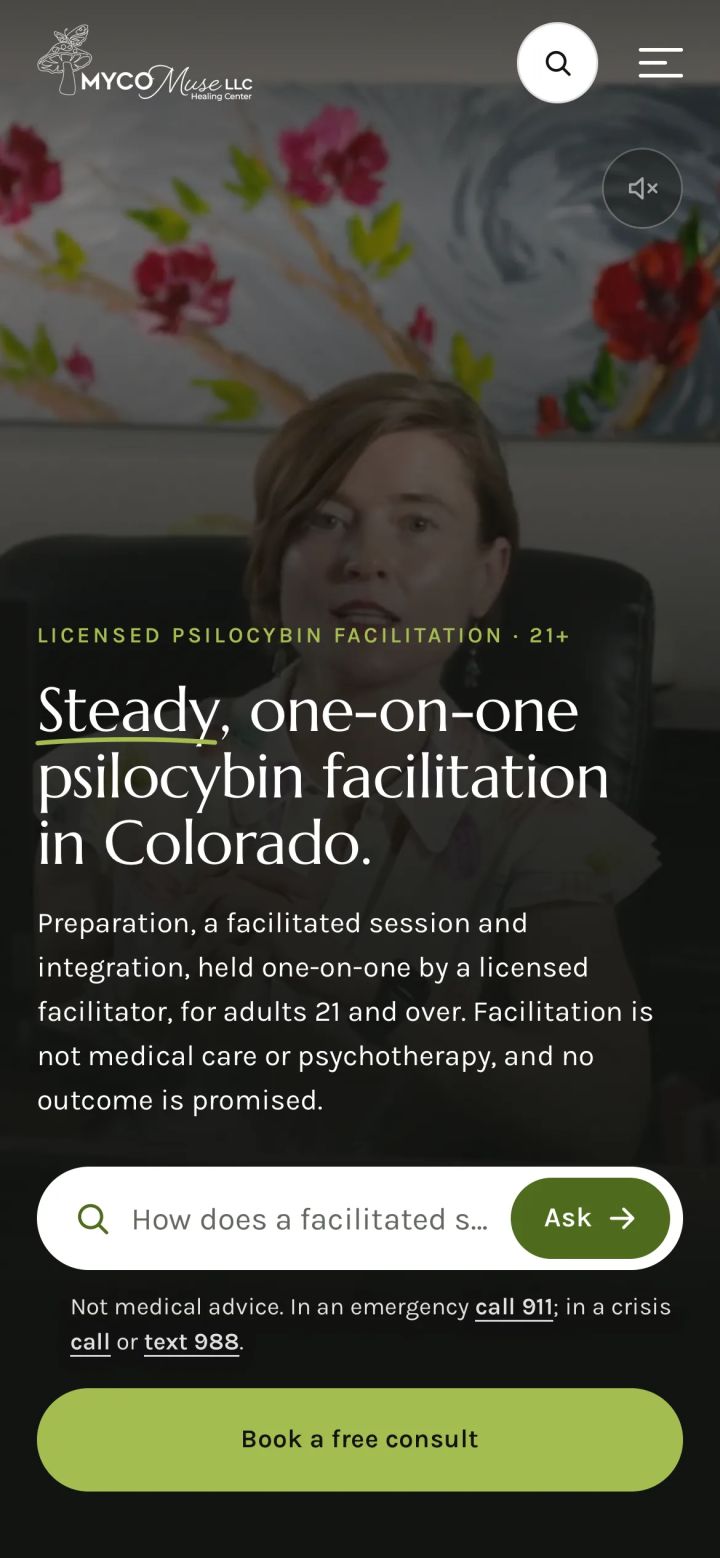
- A home page of blocks: a video hero with a sound toggle, a stats band, a services carousel, a blog carousel, an Instagram block of eight tiles and a visit block, each edited from the dashboard.
- The insurance page, carriers listed by state, Colorado and Oregon.
- The Guide's knowledge, rebuilt from the live pages by a sync script, so a page that is not published is not in the chat.
Stack
UlricCMS, forked from the Mandala clinic build on October 11, with the practitioners and offices modules off. The theme is being brought to the same standard as Mandala's, with a services scroller and an Instagram feed block in progress. Search carries over whole: the schema graph, FAQ markup, an llms.txt, related links, video and article markup, IndexNow, the sitemap. Booking is IntakeQ, linked from every page. Staging will sit on a noindexed subdomain until launch day.
Numbers
26 pages, 107 FAQs, seven posts, 28 videos, 25 settings keys and 49 media files moved by script. Five testimonials. One provider, two states, two languages. 911 and 988 on every clinical page where the old site had none. None of these is an outcome, and the site is not live yet. They are the inventory on the demo, and the practice will own every item on it.
MindMorph runs the same engine I build for clinics and therapists who would rather own their site than rent one.


Common questions
Is the MindMorph site live?
Not yet. The rebuild was signed on October 9, 2026 and the build started two days later. The aim is a launch before the new Lakewood office opens on December 1. The screens here are from the local demo of the new site.
Does the site take bookings?
No. MindMorph books through IntakeQ, and every Book button, including the "Book online" card in the Guide, hands you there at the right moment. Appointments and patient records stay in the system built to hold them; the website never collects either.
How does a psychiatry site handle a crisis?
Call 911, Call 988 and Text 988 sit at the top of the Ask panel, on every service and condition page, and in the footer. The Guide answers only from the practice's own pages, states that it cannot give medical advice, and a question carrying crisis or dosing words gets the crisis chips and nothing else. The current WordPress site has no crisis line at all.
What came over from the old site?
All of it, by script: 26 pages, 107 FAQs, seven posts, 28 videos, 25 settings and 49 media files, through import migrations that can be run again without changing anything. Every current URL keeps its address or sends a 301 to the new one.