Case study
Custom Mental Health Web Apps
Nine clinical web tools for mental-health professionals, shipped in days each: somatic mapping, bilateral stimulation, IFS parts work, breath pacing, thought records, and a DSM-5 screener. Evidence-cited, private by architecture.
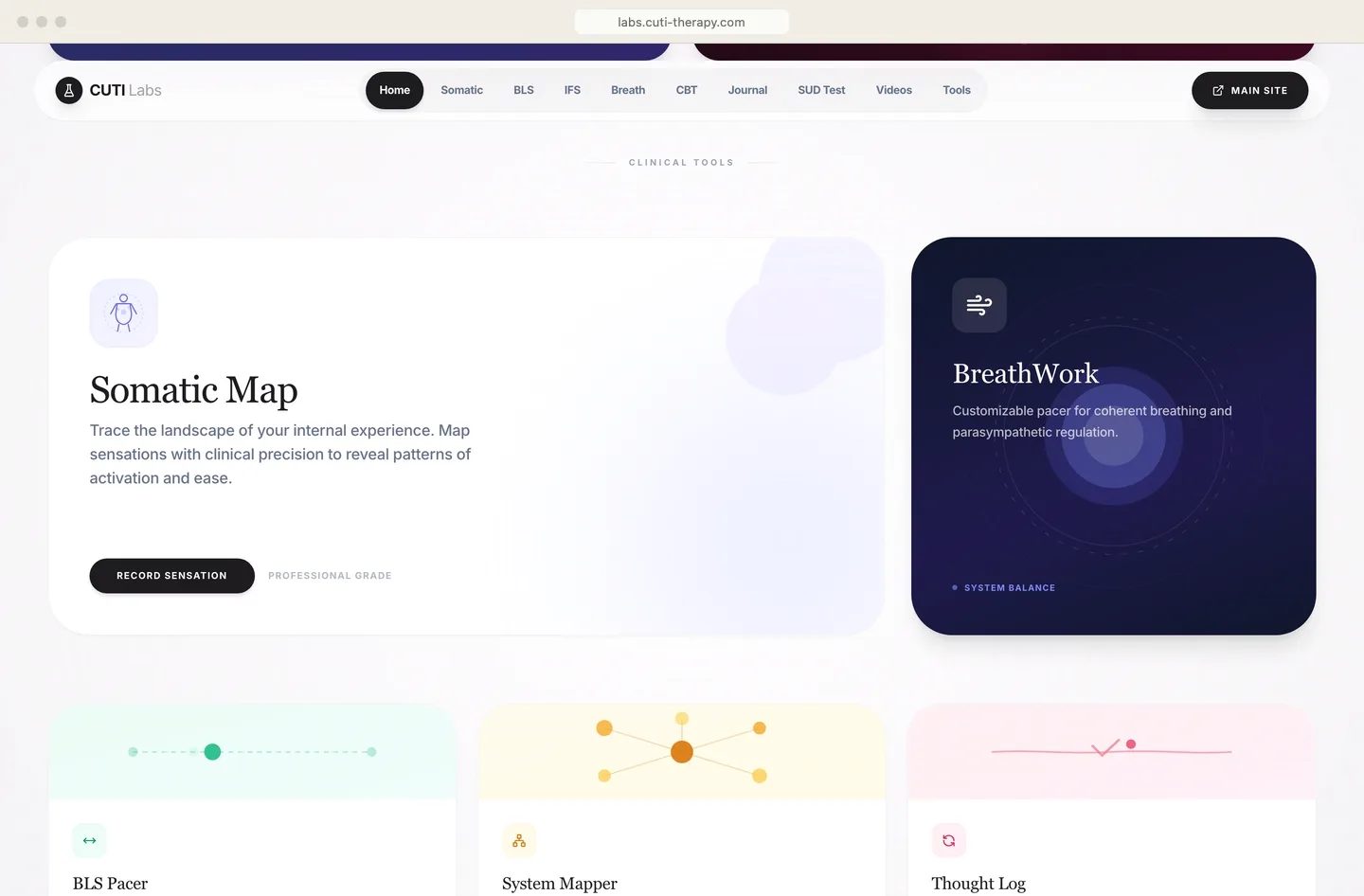
A decade in clinical work leaves you with strong opinions about the tools. Most therapy software is either a locked-down subscription or a paper worksheet with a PDF export. These nine apps are the third option: focused, interactive, evidence-cited tools that run in any browser and ship in days.
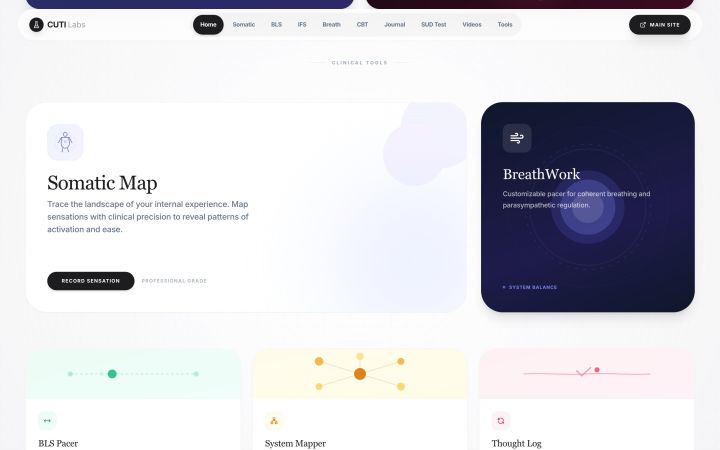
The suite covers the modalities I actually practiced: somatic mapping for interoceptive awareness, bilateral stimulation for EMDR work, an IFS parts mapper, a breathwork pacer with validated patterns, CBT thought records, mood journaling, and a DSM-5 substance-use screener with live severity scoring. Every tool opens its own evidence sheet: the overview, the clinical literature behind it, and full references, because clinicians deserve to know why a tool exists before they hand it to a client.
They are also private by architecture, not by promise: pure client-side, nothing entered is ever transmitted. For practices that want their own tool, an assessment, an intake screener, a skills app, this is what quick deployment looks like: days, not months, at published prices.


Common questions
What are these tools?
A suite of nine clinical web apps built for mental-health work: a somatic sensation tracker, a bilateral stimulation pacer, an IFS parts mapper, a breathwork pacer, a CBT thought record, a mood journal, and a DSM-5 substance-use screener, plus video psychoeducation. Each tool documents its clinical evidence with references inside the app.
Who are they for?
Therapists, counselors, and clinics that want interactive tools for sessions and between-session practice. They are screening and skills tools, not diagnosis, and everything a client enters stays on the device.
Can Ulric build a tool like this for my practice?
Yes. These tools each shipped in days, and that speed is the point: a focused clinical tool or assessment is typically a Blitz-or-Sprint-sized project with published pricing. Grounding it in your modality and your workflow is the free call.