Insights
Why your therapy practice does not show up on Google
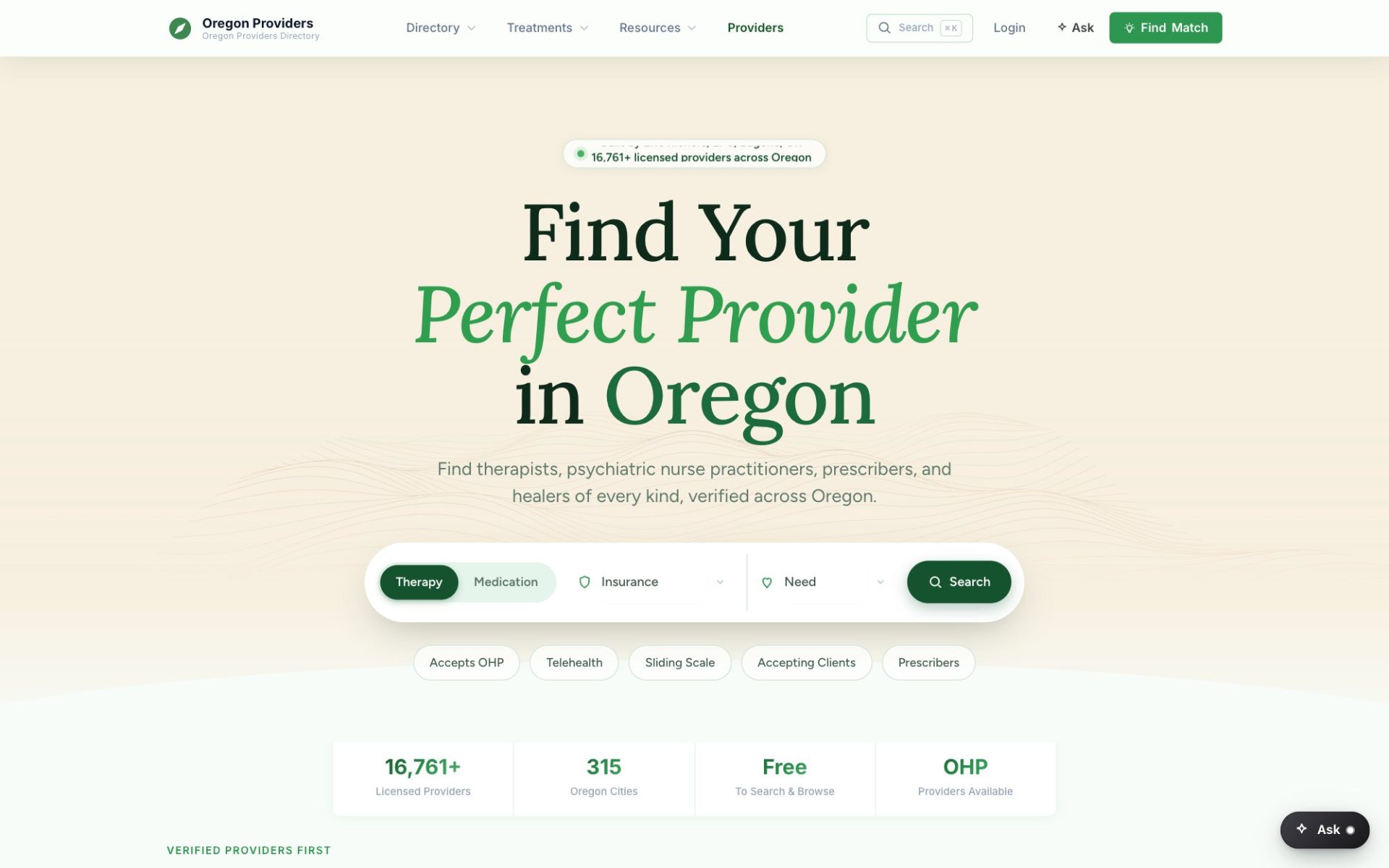
Almost every therapist who asks me about this has the same setup: a decent-looking website, a Psychology Today profile, and no idea why neither one brings anyone in. The website is usually not the problem. The problem is that nothing on it tells Google what you treat, where you treat it, or that you are a real practice with a real address.
Psychology Today stopped being a marketing plan
It still works, but it works for Psychology Today. You rent a slot on a page that ranks, and when you stop paying, everything you built there evaporates. Worse, the directory outranks you for your own specialty in your own city, so the search that should find you finds a list you are somewhere on. Renting is fine as a channel. It is a bad foundation.
The order I would actually fix it in
Most advice hands you a list of twenty things. Here is the order that matters, because the first two do more than the rest combined.
One: your Google Business Profile. If you see clients in person, this does more for you than anything else on this list, and it costs nothing. Complete every field. Pick the specific category, not the general one. Add real photos of the actual office. The profile is what puts you in the map results, and the map results are where local searches get decided.
Two: one page per thing you treat. A single Services page listing anxiety, trauma, couples, and ADHD ranks for none of them. Four pages, each about one thing, written the way you would explain it to a client in a first session, will each start to rank for their own searches. This is the part therapists resist because it feels repetitive. It is not repetitive to the person searching for exactly that one thing.
Three: say where you are, in words. Your city and neighbourhood should appear in your page text, not only in the footer address. If you are licensed in more than one state and see clients by telehealth, say which states, explicitly. Every one of those is a search.
Four: structured data. This is the part I build, and the part almost no therapy website has. It is a block of machine-readable code that states your practice name, your credentials, your address, your specialties, and your answers to common questions, in a format search engines and AI assistants read directly. It does not change how your site looks. It changes what a machine can say about you with confidence.
The new part: being recommended, not just ranked
A growing number of people now ask an AI assistant for a recommendation instead of scrolling a results page. Those systems do not rank ten blue links; they name two or three providers and explain why. What they name comes from sources they can parse and verify, which in practice means a consistent business profile, clear text answering real questions, and structured data that agrees with itself everywhere it appears.
If your address is one thing on your website, another on your directory listing, and a third on your old Google profile, you are not just losing a ranking. You are giving a machine a reason to leave you out of the answer entirely, because it cannot confirm which version is true.
What this is worth being honest about
None of this is fast. Local search rewards consistency over months, and anyone promising you page one in thirty days is either buying ads or lying. What I can tell you is that the practices I have worked with that did the first two properly saw the phone ring differently within a season, and they stopped paying rent on someone else's audience.
This is the work I do for practices every week, and I have written up what a website and directory setup for therapists actually includes.
Common questions
How long does SEO take for a therapy practice?
Realistically three to six months before the trend is clear, and closer to a year for competitive specialties in a large city. Local map results can move faster, sometimes within weeks, because a complete and consistent Google Business Profile is a strong signal on its own. Anyone promising page one in thirty days is describing paid ads.
Is a Psychology Today profile enough on its own?
It brings clients, but it builds nothing you keep. The directory ranks, not you, and the moment you stop paying, the visibility goes with it. I treat directories as a channel worth having and a foundation worth never depending on. The owned site is the asset.
Do I need a separate page for every specialty?
If you want to be found for them, yes. One Services page listing six issues competes for none of them, because it is not really about any one of them. A page per specialty, written the way you would explain it in a first session, is the difference between being findable and being listed.
Is a therapy website with client information HIPAA compliant?
A brochure site with no client data is not a HIPAA question at all. It becomes one the moment you accept intake forms, take messages, or connect scheduling to records. That is where the hosting, the forms, and any third-party tool need to be chosen deliberately, and where a signed business associate agreement matters.
Related