Insights
Scroll-scrubbed video, the cheapest premium feel on the web
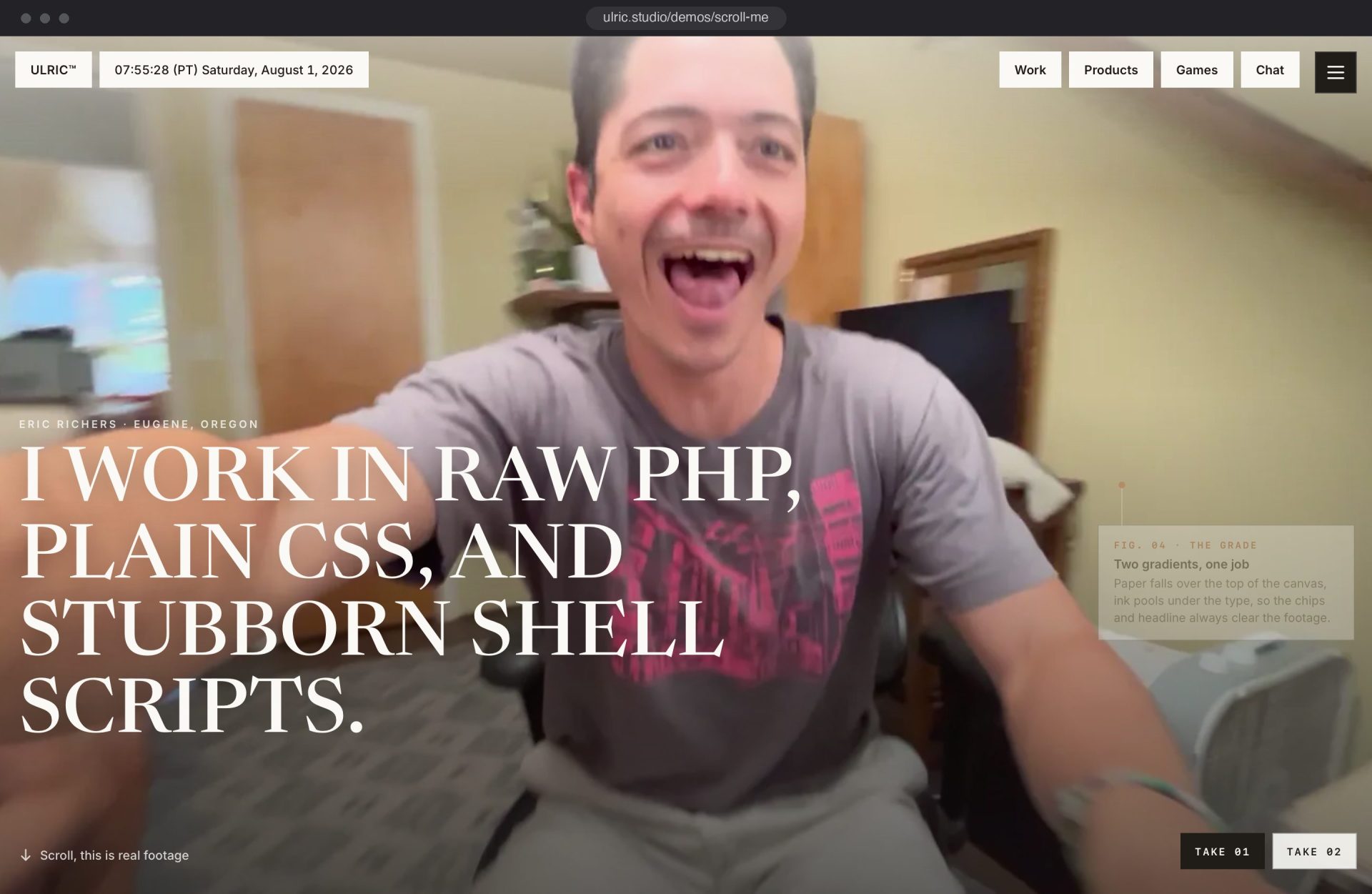
There is a trick Apple leans on for nearly every product page: the film does not play, it obeys. Scroll down and the headphones rotate, the chip explodes into layers, the watch band clicks together. Scroll up and it all runs politely backwards. The scrollbar is the play head, and your thumb is the editor.
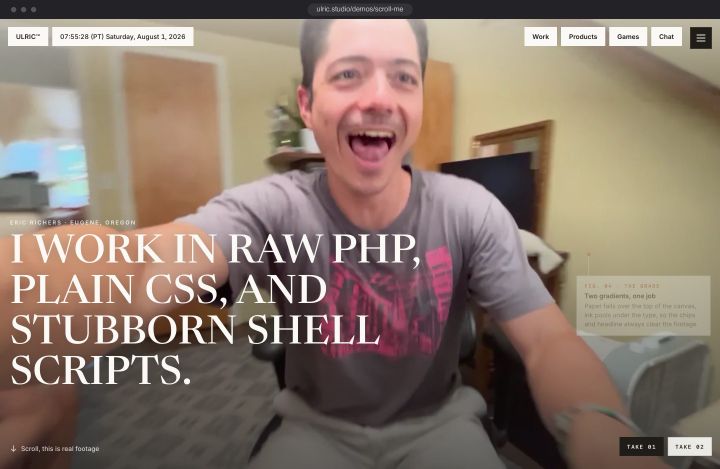
The technique is called scroll scrubbing, and it is one of the highest leverage moves I know for making a page feel expensive. So I spent a day teaching it to my toolchain properly: the video encoding rules, the frame extraction, the loaders, the phone-sized variants, all of it written down once so any clip can become a scrubbed page in an afternoon instead of a week. Then I built eight demos in a row to prove the recipe holds.
What makes it feel premium
Autoplaying video is a billboard. Scrubbed video is an instrument. The difference is control: nothing moves until the visitor moves, everything reverses when they change their mind, and the pacing of the story belongs to the person reading it. That agency is what people are actually feeling when they call a page like this polished. It respects them.
It also borrows the language of film without the cost of film. A six second clip becomes a two minute experience because the visitor sets the tempo. The same footage played in a normal video tag would be forgotten before the loop restarted.
The part nobody tells you
The technique lives or dies on plumbing you cannot see. Video seeks are slow because normal encodes only store a full picture every couple of seconds, so the first rule is re-encoding with every frame a keyframe, or skipping video entirely and drawing still frames to a canvas. I mostly draw frames: a five second phone clip becomes 100 to 150 WebP images, preloaded behind a progress bar, drawn to a canvas at whatever position the scroll dictates. Seeking becomes free, in both directions, on any device.
The rest is discipline. Phones get their own lighter frame sets, usually half the payload. Every page loads its clip fully before the scrub starts, with an honest percentage on screen. Anyone who asks for reduced motion gets a still frame instead. None of that is glamorous, and all of it is the difference between a demo and something you would ship for a client.
Eight demos, five fake brands
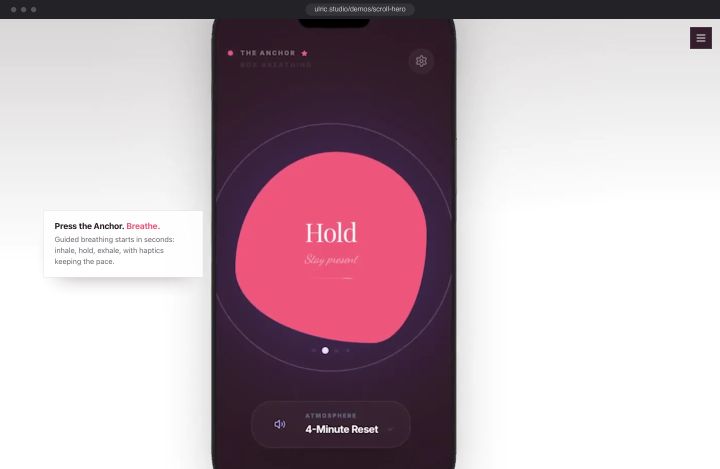
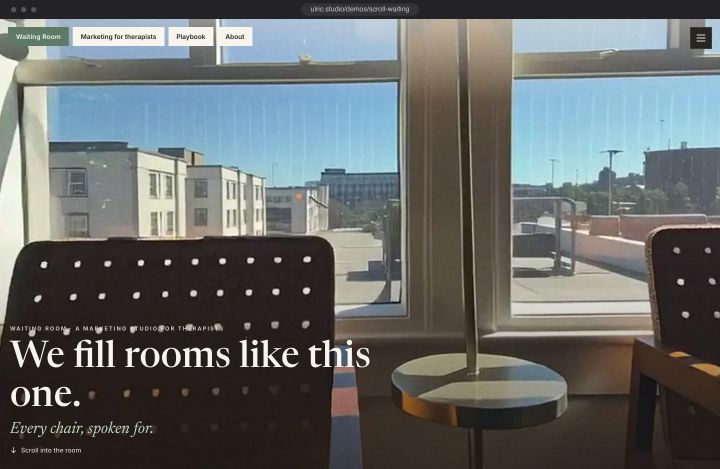
The proof lives on the products page, in a section I have been calling the scroll lab. Most of the footage started as silly five second iPhone clips shot around the studio, which is exactly the point: a clip of someone stopping to admire torch lilies on a trail became a full outdoor brand with a catalog and a straight-faced returns policy. A drone clip of a roof shingling itself became a roofing company whose whole sales pitch is that you can scroll the shingles on and off. A photo of a therapy waiting room, animated into five seconds of film, became the homepage of a marketing agency that fills chairs.
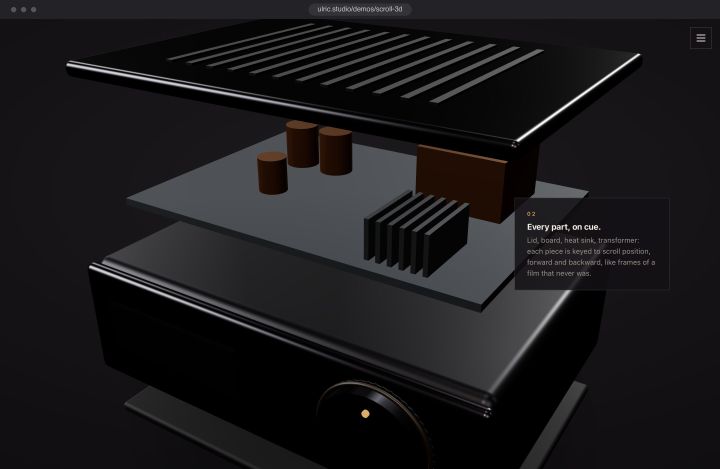
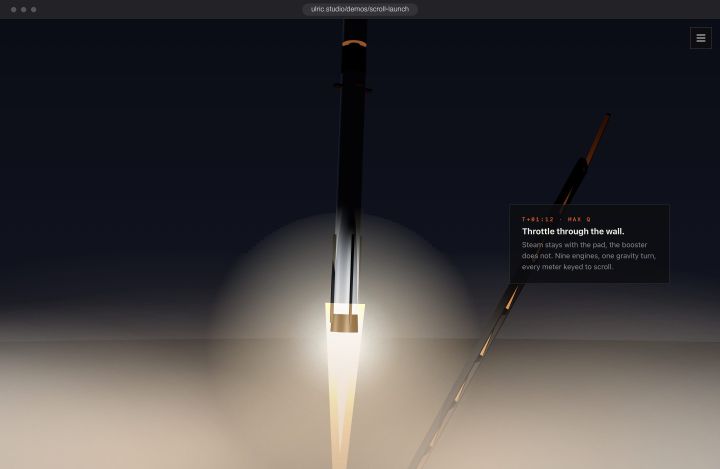
Two of the demos skip footage entirely and draw their product live in WebGL, which is where the technique goes when there is nothing to film: an amplifier that machines itself as you scroll, and a fictional launch company that flies a whole mission, night pad to planetary system, in three scrubs.
Where it earns its keep
Not every page deserves this. A pricing table scrubbed by scroll is a gimmick. The technique earns its keep when the thing being sold has a story with a beginning and an end that a camera can hold: a product reveal, a property tour, a process that assembles, a founder at their desk. Real estate listings are almost unfairly suited to it. So is anything a contractor does, because before and after is the oldest sales pitch there is, and scrubbing lets the customer run it with their own hand.
The cost side is what makes it practical now. The raw material is footage most businesses already have: a phone clip, drone footage, even a single photograph run through video generation. The premium feel comes from the craft around it, not from a production budget.
If you have a launch, a listing, or a story that deserves this treatment, the demos are live in the scroll lab and the build tiers cover what a page like this costs. Bring a six second clip; that is genuinely enough.




Common questions
What is scroll-scrubbed video?
A web technique where scrolling controls the playback position of a video or frame sequence, forward and backward, instead of the video playing on its own. Apple product pages made it famous.
Why does scroll scrubbing feel premium?
Because the visitor controls the pacing. Nothing moves until they move, everything reverses when they scroll back, and a few seconds of footage becomes a story they walk through at their own speed.
What footage do you need for a scrub page?
Five to fifteen seconds is ideal, and a phone clip is enough. The footage is re-encoded or converted to a frame sequence, so production value matters less than a clear motion with a beginning and an end.
When is scroll scrubbing the wrong choice?
Dense utility pages, long videos, and anywhere the visitor just needs information fast. It suits reveals, tours, and build-up stories, and every page should still respect reduced-motion settings.
Related