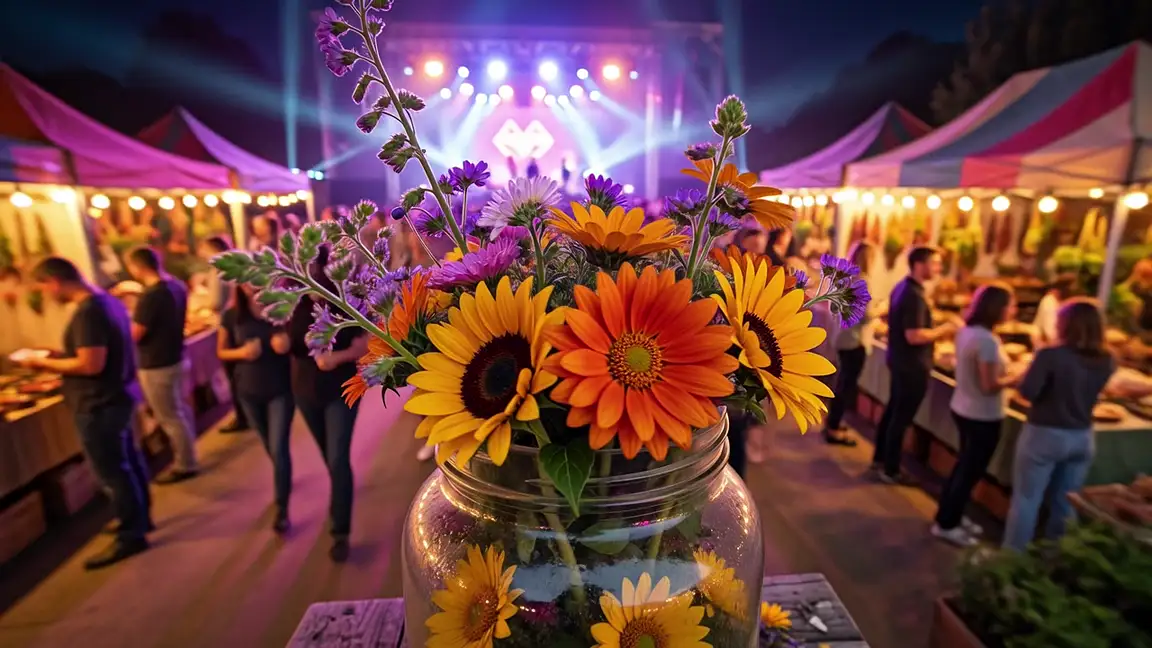
An evening market festival with flower stalls, string lights, a lit stage, and sunflowers in a mason jar

Setting up the stall

0%

Made by hand. Sold by night.

One dollar in ten feeds the neighborhood.

Scroll through the market

STALL 01 · THE PRINTS

Screen-printed by us

Totes, aprons, shirts. Original art pulled by hand, the same way this whole brand should feel.

STALL 02 · THE PANTRY

Hot sauce & pickles

Small-batch preserves, kombucha on rotation, everything from produce we can shake hands with.

STALL 03 · THE TABLE

The pop-up

Sweet corn with garlic butter, pots of soup, cucumber-lemon water. A stall this spring, a room of our own later.

The idea

One brand, every table.

Art, food, gardening, and wellness under a single name, run like a market stall and grown like a garden. The brief is blunt about it: profit keeps the lights on, but the brand is never pointed only at money. The mission is printed where the price tag usually brags.

"Build a table people stand around, then sell them something worth carrying home."

01 · STEWARD LINE

Prints with a give

  • Tote bags, aprons, shirts, stickers
  • Greeting cards and art prints, some in thrifted frames
  • One-of-a-kind pieces on thrifted and vintage blanks
  • Block prints and a small rack of high-end vintage

10% of profit goes to a food-security nonprofit the customer picks from a posted list, with volunteer dates and donation links beside it.

02 · GARDEN GOODS

Mosaics

  • Mosaic terracotta pots
  • Stepping stones and boxes

Practice pieces first, then commissions: mosaic tiling in yards, starting with friends and family to build the portfolio.

03 · PANTRY

Canned & bottled

  • Hot sauce, pasta sauce, pickles
  • Salad dressings, kombucha

Compliance flag, see The pitch

Most of this list is not cottage-food eligible in Michigan and needs a licensed kitchen or a co-packer. It changes sequencing, not the vision.

04 · POP-UP

The table

  • Sweet corn with garlic butter and aioli
  • Baked potatoes, pots of soup, tortilla soup
  • Pasta and garbanzo salads in little containers
  • Lemonade, health drinks, cucumber-lemon water

05 · VENUES

Where we sell

  • Two Detroit farmers markets, every week
  • Events and shows
  • Wholesale targets: the neighborhood co-op, two independent grocers
  • Later: Ann Arbor, Ferndale, Traverse City

06 · THE PEOPLE

Mentors on call

  • A printer: manufacturing, digital design, events
  • A bookkeeper: pricing, financial literacy
  • A brand friend: marketing and packaging
  • A lawyer in the family: entity and licensing

Four people who answer the phone. That is a real advisory board, at family rates.

The give: one partner a season.

The mechanic, spelled out: a short posted list of food-security nonprofits, all of them local, all of them places a customer could go volunteer on a Saturday. The customer picks at checkout; the donation link and the next volunteer date sit right beside the name. One partner leads each season, so the story has a face instead of a category, and the list grows as the stall does.

The art, mapped

Artwork to product.

Sunflower, a two-color stencil print of a single flower
Sunflower
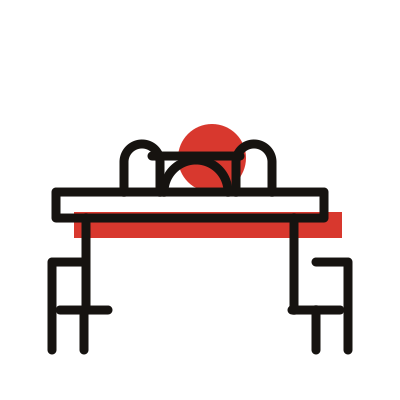
Long Table, a stencil print of a set table and two chairs
Long Table
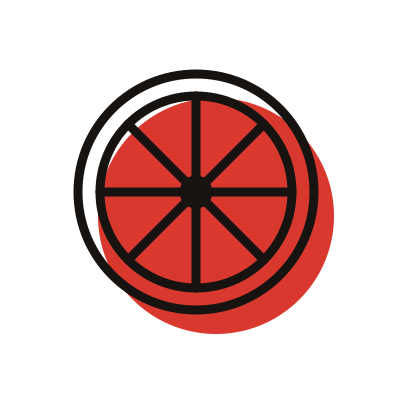
Citrus, a stencil print of a cut citrus half
Citrus
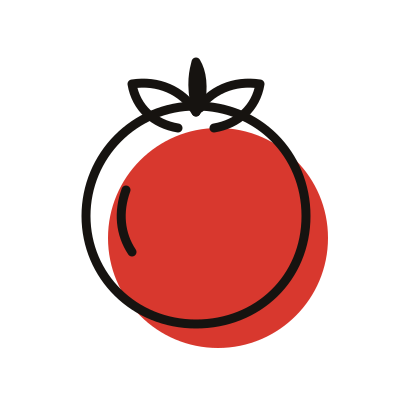
Beefsteak, a stencil print of a tomato
Beefsteak
Morel, a stencil print of a morel mushroom
Morel
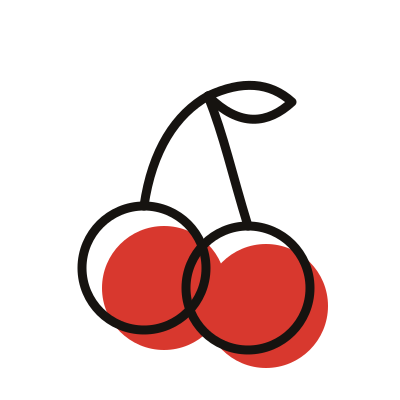
Cherries, a stencil print of a pair of cherries
CherriesRedrawn before prototype
The Grower, a stencil print of a figure holding a flower
The Grower
Night Moth, a stencil print of a moth with open wings
Night Moth

The prototype matrix from the brief: eight pieces, six product types. Red marks are planned; kraft marks are maybes. Cherries gets redrawn before its prototype order. Every piece here is placeholder art in the brand's stencil system, standing in for a real artist's catalogue.

ArtworkToteApronShirtStickerCardPrint
Sunflower
Long Table
Citrus
Beefsteak
Morel
Cherries
The Grower
Night Moth

First steps

Spring, step by step.

BUILD

Inventory without a warehouse

Print-on-demand prototypes first (10-20 shirts, totes, and aprons; 50-100 stickers, cards, and prints), one-of-a-kind pieces pulled by hand alongside. POD margins are thin, so it is a prototyping and overflow tool, not the business; hand-pulled runs are where the margin and the story live.

RECIPE

Write down the feel

The brief is honest that the cooking runs on instinct. Every batch gets notes until the hot sauce is repeatable, because consistency is what stores buy. Source seconds from local farms; that sourcing line doubles as the marketing hook.

LEGAL

The paperwork spine

Business license, then a free Michigan sales tax license, food safety training for the market stall, and a cottage food registration for what qualifies. Card and digital payments from day one; markets take cash and Venmo but wholesale will not.

MONEY

Family round, spreadsheet rules

Parents first, the wider family once the numbers are real, every dollar tracked from the first prototype order. Unit costs written down per product before pricing anything.

LEARN

Courses that compound

A permaculture design certificate, a local herbalism course, a small-business program. On write-offs the honest answer is: education that improves an existing business is generally deductible, education that qualifies you for a new trade is not, so form the business first and ask a CPA to draw the line.

RESEARCH · MICHIGAN COTTAGE FOOD

Michigan raised its cottage food ceiling to $50,000 in gross annual sales in March 2026, with a $75,000 tier for operations whose products all price at $250 or more, and inflation adjustments after October 2026. But the MDARD list covers only non-hazardous foods: jams, baked goods, dried mixes. Hot sauce, pickles, dressings, and kombucha are acidified or fermented and are not on it. They need a rented licensed kitchen or a co-packer. The pop-up food itself runs under a temporary food establishment license per market instead.

Long term

The garden the brand is named for.

PLATFORM

Friends' work on the table

Consignment for other artists once the stall has an audience; common splits run 50-60% to the artist, and the house cut funds the space that sells them.

HERBAL

Salves, blends, teas

After the herbalism course and with labeling done right: topicals fall under FDA cosmetic rules, and anything with claims crosses into drug territory, so the copy stays about the plant, not the cure.

DESIGN

The eco-wellness studio

Permaculture design and mosaic installations, portfolio built in friends' and family's yards, priced as design work rather than labor.

ROOM

Brick and mortar

Art, high-end garden supply, herbs, classes after close, kava nights and cacao ceremonies. A liquor license or an espresso machine is a later decision, and the brief already flags it as a hassle worth weighing.

LAND

The property

Owned or communal: weddings with house-grown flowers, retreats, work trades, natural building, a small nursery growing specialty herbs, plant starts, and the produce the pantry line cans. The wellness wing grows from people already trusted, one teacher at a time.

The name

A name that can grow with it.

The brief sets its own bar: not a product name, a vision name. Four tests worth applying to every candidate: does it hold all four tables (art, food, garden, wellness), does it sound like the city it lives in, can product lines nest under it, and can you say it across a market stall without explaining it.

Marigold Union
Rust Belt Garden
Paper Radish
Bramble Haberdashery
Great Lakes Mercantile
The Cob
Corn Star
Honeylight
Poppy
October
Boxcar Studio
Wildseed
Morning Shift
Root & Riot
Common Table
Second Tomato

RECOMMENDED UMBRELLA

Root & Riot

It passes all four tests: garden in the first word, art in the second, warm at a market stall, roomy enough to hold prints, pantry, design, and one day the farm. "Root & Riot Press," "Root & Riot Pantry," and "Root & Riot Farm" all sound inevitable. Check the trademark and the handle landscape before printing tags.

STRONG ALTERNATE

Wildseed

The other favorite: evocative, art-forward, and the most distinctive word on the list. It carries prints and vintage beautifully; it fights the pantry line a little, since seed next to a jar of sauce reads as an ingredient. Best kept as the art imprint under the umbrella.

KEEP FOR THE POP-UP

The Cob

Too narrow for the whole vision, exactly right for the corn stand. Corn Star is the kids-menu voice of the same idea. Sub-brands are how the silly names get to live without capping the company.

HOW THIS PAGE USES IT

Root & Riot is the wordmark carried across this build, and the whole point of the exercise is that it is a variable. The stencil system, the spray red, the kraft and ink: all of it holds for Wildseed or Common Table with nothing swapped but the two words at the top.

Market data

The lanes, sized.

Published figures for each lane the plan touches. Global numbers unless marked US; every figure links to its source below.

Custom-printed apparel

$7.0B

+11.6% CAGR

Global custom t-shirt printing, 2025, heading toward $13B by 2031. North America holds roughly 39% of it. [1][2]

Hot sauce · US

$1.17B

+7.6% CAGR

US hot sauce alone, 2025, projected near $1.95B by 2032. Small-batch and regional brands drive the premium end. [3]

Kombucha

$3.25B

+13.7% CAGR

Global kombucha, 2025, forecast to roughly double by 2031. North America pours about 44% of it. [4]

Farmers markets · US

8,700+

$2.1B direct sales

Markets in the USDA directory; direct farm sales hit $2.1B (2021). Average vendor grosses about $45k a year. [5][6]

Agritourism

$81.2B

+10.8% CAGR

Global agritourism, 2025, projected to $209B by 2034. Farm stays, retreats, and events are the growth engines. [7]

Cottage food ceiling · MI

$50k / $75k

Standard / high-price tier

Michigan's gross-sales caps for home food operations as of March 2026, and the reason the pantry line eventually graduates to a licensed kitchen. [8][9]

TAM

$90B+

The five lanes combined, globally: printed apparel, hot sauce, kombucha, direct farm retail, agritourism. Context, not a promise.

SAM

Detroit & southeast Michigan

Two weekly Detroit markets, the neighborhood co-op and two independent grocers for wholesale, the events circuit, then the sister towns: Ann Arbor, Ferndale, Traverse City. Michigan runs one of the densest farmers-market networks in the Midwest.

SOM · Year one

$40-60k

Stall math, not a report: two regular markets at the USDA average vendor gross ($45k), plus online and the first wholesale accounts. Honest, reachable, fundable.

Sources

  1. [1] Precedence Research, Custom T-Shirt Printing Market
  2. [2] Mordor Intelligence, Custom T-Shirt Printing Market
  3. [3] Fortune Business Insights, U.S. Hot Sauce Market
  4. [4] Mordor Intelligence, Kombucha Market
  5. [5] USDA AMS, Farmers Markets and Direct-to-Consumer Marketing
  6. [6] USDA ERS, Growth in U.S. Farmers Markets
  7. [7] IMARC Group, Agritourism Market
  8. [8] MDARD, Michigan Cottage Foods Information
  9. [9] MCL 289.4102, cottage food operation

Figures are the sources' published estimates, rounded, pulled August 2026. Different research firms size these markets differently; links go straight to the originals so the numbers can be checked, not taken on faith. The SOM line is the stall's own arithmetic and is labeled as such. The brand itself is invented for this build.

Design mockups

The brand on real things.

Flat mockups in the working brand system: stencil type, spray red, kraft and ink. Swap the wordmark if another name wins the vote; everything else holds.

ROOT & RIOT 10% FEEDS THE NEIGHBORHOOD

Steward tote

Kraft canvas, one-color pull. The give printed where the price tag usually brags.

MADE BY HAND

Market tee

Paper blank, red mark, hand-pulled in short runs so no two batches match exactly.

ROOT & RIOT HOT SAUCE SMALL BATCH 001 DETROIT, MI

Pantry label

Batch-numbered kraft label. The commercial-kitchen line item, wearing its Sunday best.

THE GROWER

Greeting card

The Grower's first job, per the matrix. Kraft envelope, blank inside, art on the front.

Social campaigns

Six ideas that post themselves.

Everything durable in this plan is already content. None of these need an ad budget; they need a phone, the stall, and consistency.

CAMPAIGN 01

The receipt

Each season, post the actual donation math: what sold, what 10% came to, the check going to the season's partner. Proof beats promise.

Format carousel + story
Cadence quarterly
Goal trust that compounds

CAMPAIGN 02

Second tomatoes

Short reels from the farms the pantry buys seconds from, named and thanked. The sourcing story is the marketing hook the brief already wrote.

Format 20-30s reel
Cadence per batch
Goal local-first proof

CAMPAIGN 03

Pulled by hand

The squeegee pass, the screen lift, the print reveal. Screen-printing is the most watchable process on the internet; own it in fifteen seconds.

Format 15s reel, no talking
Cadence weekly
Goal reach + product drops

CAMPAIGN 04

Stall day

Same-morning story ritual: the van packed, the table set, the first pot of corn steaming. Ends with the market map pin, every single time.

Format story set
Cadence every market day
Goal foot traffic

CAMPAIGN 05

Artist takeover

When consignment starts, each artist gets a takeover week: their work on the table, their story in the feed, their audience meeting the stall.

Format feed + collab posts
Cadence monthly, year two
Goal platform flywheel

CAMPAIGN 06

Wheat-paste countdown

Stencil posters around town before opening weekend: no explanation, just the sunflower mark and a date. Reveal the stall on the last morning.

Format posters + one reveal reel
Cadence two weeks pre-launch
Goal opening-day line

RESEARCH NOTE

The campaign set follows what the studio's own social research keeps proving: process footage and receipts outperform announcements, and a repeated same-day ritual builds habit better than any posting schedule. All six run from one phone.

The pitch

How this grows.

The plan already contains its own flywheel; it just needs sequencing. Food draws the line. The line buys the prints. The give turns every sale into a story. The story builds the platform, and the platform pays for the land. Each phase funds the next; nothing waits on a loan.

Now → Spring

The legal spine, then two markets

LLC, seller's permit, food handler cards, temporary food establishment licenses for the pop-up, cottage registration for what legitimately qualifies. Open at two Detroit markets with the corn table and the steward totes only: one food anchor, one merch anchor, nothing else. The constraint is the brand.

Year one

Consistency, then the shelf

Same two markets every week until strangers know the stall. Move sauce production into a rented licensed kitchen the moment recipes are written down, because that unlocks the co-op and the independent grocers, and their buyers already stock local-first: the sourcing story is the pitch. Online store handles the between-markets demand. Target: the USDA average vendor gross as a floor, not a ceiling.

Year two

The platform turn

Add friends' and other artists' work on consignment at a 50-60% artist split. This is the moment the stall becomes an institution: the booth starts curating the scene instead of just selling into it, and the house cut compounds without another hour behind the table.

Year two-three

The room

Brick and mortar in Detroit: art and garden supply up front, classes and kava nights after close. The events are not a side business; they are customer acquisition the bar tab pays for. Herbalism line launches here, after the course, with labels that talk about plants and never about cures.

Beyond

The land

The property is the original vision and the last purchase: weddings with house-grown flowers, retreats, the nursery, produce for the pantry line. By then the brand has years of receipts, which is what turns a family round into a real one. Agritourism is the fastest-growing lane on the market tab; the plan lands there on purpose.

"The soup pays the rent on the table. The art is why the table exists." That is the whole strategy, and it is right.
R1

The pantry legality gap. The signature products (hot sauce, pickles, kombucha) cannot ship from a home kitchen in Michigan. Budget licensed kitchen hours from day one or the flagship line stalls the launch.

R2

Spread. Four tables, fifteen product ideas, one pair of hands. The brief already knows it: the table is small on purpose. Two markets, two anchors, everything else earns its way in.

R3

POD margins. Print-on-demand keeps cash low but keeps margins low too. Use it for prototypes and overflow; hand-pulled runs and one-of-a-kind pieces are where a $12 blank becomes a $45 story.

R4

The give needs receipts. "10% to the neighborhood" is a claim; publish the donation totals each season. The transparency is worth more marketing than the donation costs.

WHY THIS WORKS AS MARKETING

Every durable piece of this plan doubles as the story: produce from named local farms, a nonprofit partner people can volunteer with, art pulled by hand at a table you can stand at. None of it needs an ad budget; it needs consistency and a website that looks like this page. That is the pitch.

Root & Riot is an invented brand, built by Ulric to show what a scroll-driven launch page looks like end to end. The founders, the artwork, the plan, and the arithmetic are all made up for the exercise; the market and regulatory figures are real, sourced, and pulled August 2026. Nothing here is legal or tax advice. It sits in the scroll lab as a sample of the build, and stays out of search.

Back to the scroll lab